
“The Microbiologist and His Times:” The Scientific Activism of Salvador Luria
Rena Selya
In the fall of 1938, Dr. Salvatore Luria faced a difficult decision. He had recently been awarded an Italian state grant to pursue scientific research abroad, and he planned to travel to the United States to continue his investigations of genetics, using an exciting research organism, the bacteriophage, a class of viruses that attack bacteria. Although he had graduated from the University of Turin medical school with high honors after working in Guiseppe Levi’s histology laboratory with fellow future Nobelists Rita Levi-Montalcini and Renato Dulbecco, Luria was not interested in practicing medicine. He had chosen a residency in radiology, a specialty that used techniques from physics, because he hoped to apply ideas from modern physics to biological questions. Inspired by the ideas and early experiments of Max Delbrück, a German physicist who had turned his attention to biology, Luria was intrigued by the bacteriophage (sometimes referred to as “phage”) and its potential to shed light on the genetics of its bacterial hosts as well as the nature of virus replication. However, before he could choose a research site, the Italian Fascist government passed a series of Race Laws that barred Jews from government employment, including educational grants. Overnight, Luria became ineligible to work as a physician or a scientific researcher. He later recalled that he felt he had only two options: stay in Italy and join the Resistance or accept the support of his mentor Enrico Fermi to help him move to France and find a research position at the Institut du Radium in Paris. Taking his parent’s blessing and the values of mutual respect, peace, and ethical behavior that he had learned from the Turin Jewish community, Luria moved to Paris.
By March 1940, Paris was no longer a safe place for Jews. His mentor Fernand Holweck appealed to the Rockefeller Foundation to include Luria in their program to rescue Jewish scientists from Nazi Europe but was told “it was not feasible” to support him at that time. When the Nazis invaded Paris in June, Luria fled the city on a borrowed bicycle, making his way to Portugal where he hoped to immigrate to the United States. In August 1940, he obtained a document from the Portuguese Commission for the Assistance of Jewish Refugees, certifying that he was a “bone fide Jewish refugee fleeing from racial oppression” and expressing the “hope he will be allowed to reach unmolested the United States, where he is emigrating.” On September 12, 1940, Luria arrived in New York.
New York was transformative for Luria in many ways. He immediately applied for American citizenship and on the application changed the spelling of his name from “Salvatore” to “Salvador,” symbolizing his determination to renounce his Italian citizenship. He soon leveraged his connection to Fermi into a temporary research appointment at Columbia University, and arranged to meet Delbrück, who was eager to learn the bacteriophage plating techniques Luria had perfected in France. The pair decided to spend the summer collaborating at the Cold Spring Harbor Biological Laboratory on Long Island, where Luria was introduced to -- and thoroughly impressed – the elite of the American genetics community.

Luria and Delbrück shared the common goal of understanding how bacteriophage reproduce inside their bacterial hosts, whether working together at Cold Spring Harbor or separately in their respective laboratories. Answering this simple question required careful analysis of viral and bacterial physiology, biochemistry, and genetics, and the use of sophisticated statistical methods. New technologies were vital to their success. Luria was one of the first researchers to use an electron microscope to visualize bacteriophage, and he later described in his autobiography how delighted he was to see his “favorite organisms in all their naked beauty.” (Figure 1)
Luria and Delbrück also met Alfred Hershey, a shy Midwestern researcher who had trained as a bacteriologist and was interested in bacteriophage. Delbrück later quipped that together, “two enemy aliens and a social misfit” formed the core of the Phage Group, a productive network of researchers and students who laid the foundations of modern virology, molecular biology, and genetic engineering.
Although the Rockefeller Foundation had been unable to help Luria leave Europe, it did support him once he arrived in the United States, on the condition that he accept the first job offer he received. And so, in January 1943, Luria moved to Bloomington, Indiana to join the Botany and Bacteriology Department. Soon after he arrived, he was inspired by watching a fellow faculty member play with a slot machine to design a simple yet elegant experiment to test whether bacterial resistance to bacteriophage was genetic or arose in response to the virus in a given environment. If it was genetic, then resistance would only be observed in a few “jackpots” of existing mutations if bacteria were exposed to bacteriophage. If resistance was a result of environmental exposure, then he would observe resistance scattered more evenly in the bacteria. A few days later, Luria observed jackpots of resistance in a few petri dishes. He sent his data to Delbrück, and the two published the results in a landmark article in Genetics called “Mutations of Bacteria from Virus Sensitivity to Virus Resistance.” This experiment, known as the “fluctuation test,” provided statistical evidence that the resistance was due to previous genetic mutations, and cemented Luria and Delbrück’s reputations as emerging stars in American genetics. The fluctuation test is still used in biology classes today and is a frequently cited classic paper in genetics.
As Luria’s reputation grew, he attracted graduate students including James Watson, mentored early career researchers such as Evelyn Witkin and Joshua Lederberg, and recruited his old colleague Renato Dulbecco as a postdoctoral fellow in his lab in Indiana. On a more personal level, Evelyn Witkin introduced Luria to his wife, Zella Hurwitz, a graduate student in psychology at Indiana University.
Luria was profoundly grateful to become a United States citizen in 1947, and he immediately began to exercise his rights and responsibilities as an American. In a 1985 interview, he explained, “I made up my mind that as an American citizen I would be an active participant in American politics, taking advantage of the democratic opportunities that were not available to me in Italy. What scientific achievement I have reached is due to the freedom provided in this wealthy country to all aspects of intellectual enterprise.” Freedom, democracy, and science were all linked in Luria’s mind as mutually reinforcing ideals. In the 1940s and 50s he focused on issues that were close to the scientific community, such as supporting Soviet geneticists in the face of Trofim Lysenko’s crushing of Western genetics and wrestling with the implications of the American Association for the Advancement of Science meeting in Atlanta, a racially segregated city. In these instances, Luria held himself and his fellow scientists to the highest standards of equality and intellectual freedom.
Luria also participated in local desegregation efforts in Bloomington and served as a poll watcher on behalf of Henry Wallace’s third- party candidacy in the 1948 presidential election. These activities attracted the attention of the Federal Bureau of Investigation, and Luria was subject to a two-year “thorough discreet investigation” that included an illegal mail cover to monitor his correspondence, and a meeting with FBI agents about his loyalty to the United States. Colleagues and other informants at Indiana University and the University of Illinois, where Luria moved in 1950, described him as an excellent scientist with liberal views. For all of their efforts, FBI agents did not turn up any evidence of membership in the Communist Party, and the investigation was closed. Nevertheless, in 1952, Luria was denied a passport by the United States Department of State, on the grounds that “your proposed travel is not in the best interests of the United States,” even though he was the only American researcher invited to present at the prestigious Society for General Microbiology. These allegations and restrictions did not damage Luria’s scientific reputation, nor did it diminish his commitment to speaking out on issues of national or international importance.

Although Salvador was happy at the University of Illinois, Zella was subject to strict nepotism rules that prevented family members from being hired as full time faculty. When he was recruited to the Massachusetts Institute of Technology (MIT) in the late 1950s and she was offered a position at Tufts University, the Luria family (which now included a son, Daniel) relocated to Boston.
At MIT, Luria was tasked with revamping the biology department faculty and curriculum at a time when the life sciences were changing dramatically. Although university biology departments had traditionally focused on zoology and botany, the work that Luria and his peers had pioneered in the 1940s and 50s, and its implications for applications in industry and medicine, meant that new faculty and students would be drawn towards microbiology, molecular biology, and biophysics. As a leader in microbiology, Luria was in a prime position to identify talented researchers and attract funding for new laboratories and infrastructure. Within a few years, Luria had secured a $100,000 grant from the National Institutes of Health to build a new microbiology laboratory, reorganized the undergraduate biology curriculum, and recruited rising biology stars such as David Baltimore, Maurice Fox, and Nancy Hopkins. His impact on the life sciences at MIT culminated in his establishing the first Center for Cancer Research (now the Koch Institute for Integrative Cancer Research) to be funded by the National Cancer Act of 1971. He continued to pursue his own research and supervise graduate students until he officially retired from MIT in 1985.
Even as he was transforming biomedical research at MIT, Luria found great purpose and meaning in the local and national movements against the Vietnam War. He was a founding member of the Boston Area Faculty Group on Public Issues, a group of academics from many academic institutions who published ads in newspapers and organized lectures and sit-ins to protest the war. One of their more successful campaigns was a full-page ad in the New York Times published in the Sunday opinion section in January 1967. In big block letters, the ad declared “MR. PRESIDENT: STOP THE BOMBING” surrounded by thousands of signatures from professors and researchers all over the United States. Luria was in a unique position to convince his fellow scientists to ensure that their research was not used in harmful ways. For example, in 1968, Luria was the president of the American Society for Microbiology when the members voted to end their advisory committee supporting the United States Army Biological Laboratory at Fort Detrick, Maryland. In his presidential address, entitled, “The Microbiologist and His Times,” Luria urged his fellow scientist to be cognizant of the fact that in the modern world, “It is painfully clear that the findings of science can all too easily be employed, not to enrich the human experience, but to make it more painful.” He encouraged his fellow scientists to work towards “the achievement of a society in which science will flourish, both as a liberating intellectual activity and as the source of a beneficial technology.” A year later, the Biological Weapons Laboratory closed and was later repurposed as a cancer research facility.
On October 15, 1969, Luria was one of hundreds of thousands of American citizens who participated in the Vietnam Moratorium, a day of protest and advocacy to end the war. The next day, on October 16, as Luria was washing the breakfast dishes, he received word that he, Delbrück, and Hershey had just been awarded the Nobel Prize in Physiology or Medicine in acknowledgement of their fundamental work on bacteriophage. With a peace pin on the lapel of his sports jacket, a beaming Luria told reporters that he would contribute part of his share of the prize money to anti-war organizations. The weekend was full of celebratory phone calls, letters, and telegrams, including many from admirers who assumed he had won the Nobel Peace Prize. Luria awoke on Monday morning October 20 to see his photograph once again on the front page of the New York Times, with the headline “Second H.E.W. Blacklist Includes Nobel Laureate.” Reporters had found a list of a number of scientists, including Luria, who while they were had federal support for their own research, were excluded from serving on National Institutes of Health review panels, out of concerns about “security” and “suitability.” The existence of a blacklist, even one without serious consequences, was a strong reminder of the ways in which political, cultural, and scientific priorities were –and continue to be – linked in the United States.
In this one weekend, all of Luria’s public roles converged in a flurry of headlines, highlighting how he had successfully integrated his political and scientific ideals into a single passionate determination to use the values of American democracy and scientific integrity to work toward a positive future for humanity. His dedication to protecting American society from a destructive war and his commitment to ensuring that the work of science would always be used for the benefit of mankind compelled him to oppose the Vietnam War and take an active role in guiding biomedical research. As an American, a scientist, and a human being, he felt he could do nothing else.
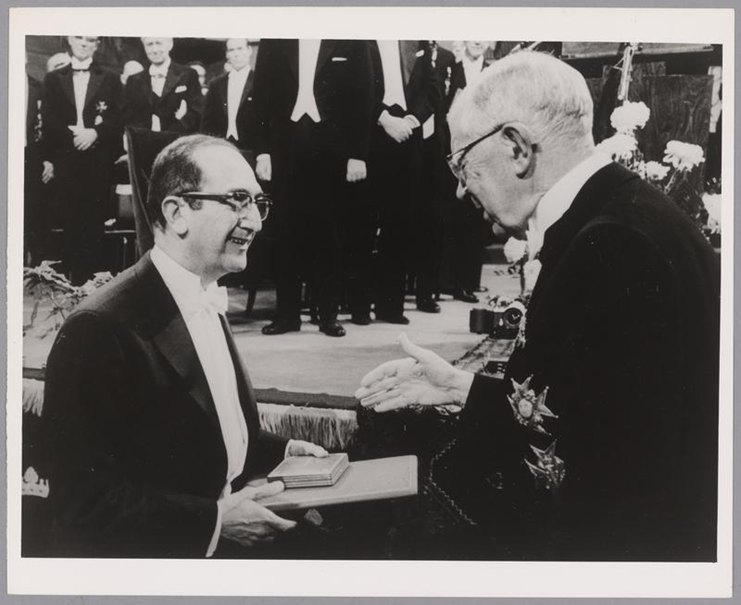
More than fifty years later, Luria’s example reminds us that individual scientists have always had the courage to speak out about what they believed would be best for the United States. Salvador Luria was a passionate and brave advocate for responsible science in the service of life, and for using our rights as citizens to raise our voices on behalf of peace, academic freedom, equality, and opportunity for all. May his memory inspire others – scientists and citizens alike – to follow his lead.


